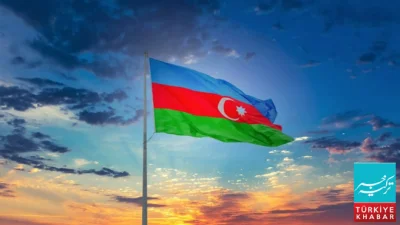
Azerbaijan (Turkiya News): Amid shifts in the geopolitical and economic balance in Eurasia—where Russia is losing its former influence while the United States and other global players strengthen their presence through economic cooperation, infrastructure projects, and diplomatic initiatives—Azerbaijan is emerging as a central player.
According to an analysis by Forbes, these developments are creating a new geoeconomic zone stretching from Eastern Europe and the Black Sea to Turkey, the South Caucasus, the Caspian, Central and South Asia, and the Arabian Sea. Historically, this vast region has been a hub of competition among various empires, including the Greek, Persian, Roman, Byzantine, Arab, Turkish, Mongol, and Russian empires.
Forbes notes that within the current trans-Eurasian network, Azerbaijan functions as a strategic bridge, linking European, Eurasian, and Indo-Pacific economic systems and security frameworks. In this context, deepening US-Azerbaijan relations is crucial for influencing the regional balance of power.
Analysts argue that the sanctions on Azerbaijan under Section 907 of the Freedom Support Act are now outdated and should be repealed, as efforts to maintain them have failed and are harming US interests, particularly in connection with the TRIPP project and its benefits for the United States.
Forbes also highlighted that US Vice President J.D. Vance’s visits to Yerevan and Baku aim to accelerate the “Trump Route for International Peace and Prosperity” development project, which will connect Azerbaijan to its exclave Nakhchivan via Armenia.